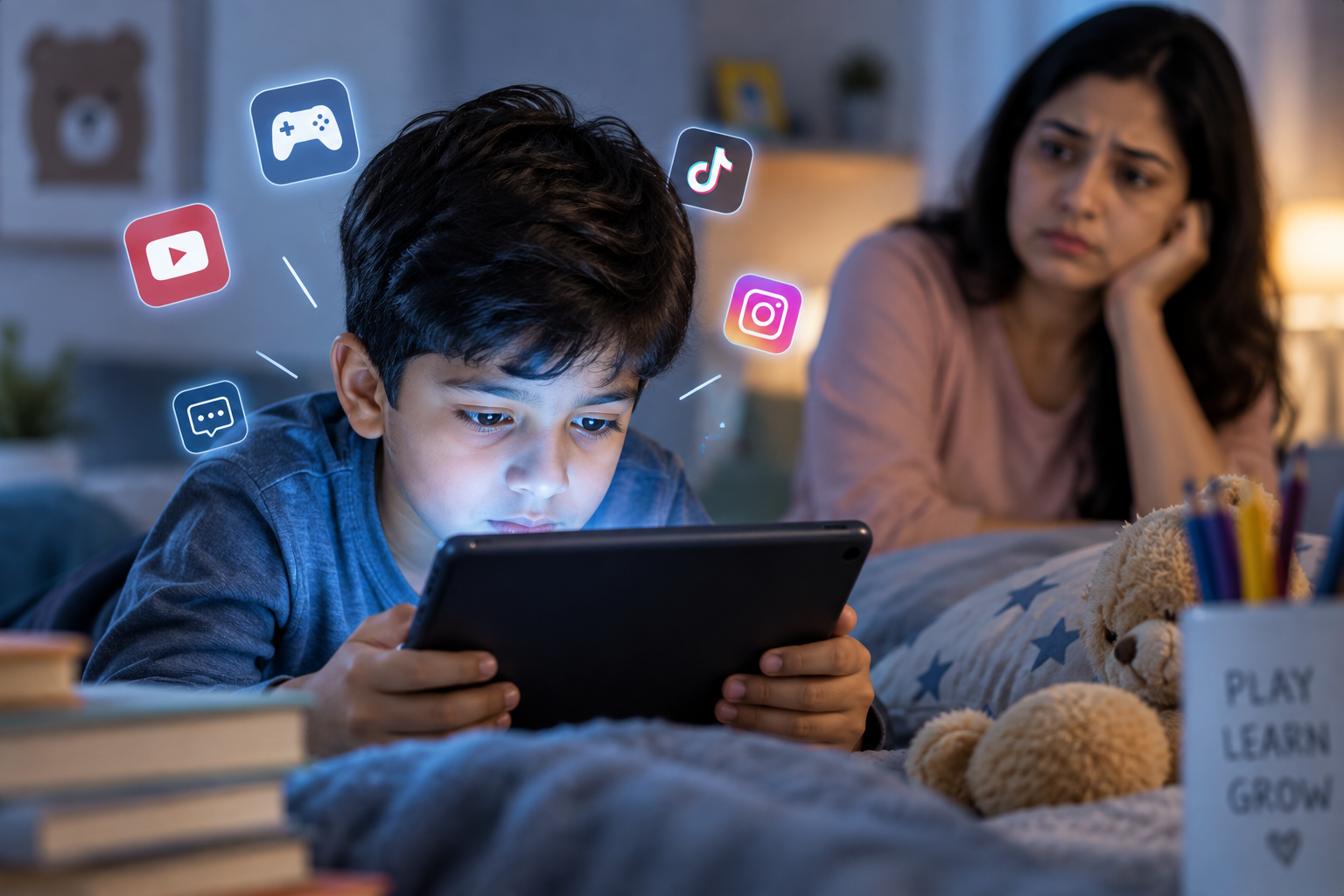
You ask your child to put down the phone for dinner, and they explode in anger. Or perhaps you notice they've stopped joining family activities, preferring to stay glued to their tablet or gaming console. If this sounds familiar, you're not alone. Many parents today worry: is your child addicted to screens?
Screens are now woven into children's education, entertainment, and social lives. Used wisely, they offer real benefits. The more important question isn't simply how many hours your child spends online, but whether screen use is interfering with sleep, schoolwork, relationships, emotions, physical activity, or everyday functioning. If you're concerned about problematic patterns, speaking with a Child Mental Health Specialist in Bhubaneswar can provide personalized guidance.
What Does Problematic Screen Use Mean?
Not all screen time is created equal. Understanding the difference between normal, high, and potentially problematic use helps parents respond appropriately.
Normal screen use fits into a balanced routine. Your child can stop when asked, maintains other interests, and screens don't disrupt sleep or responsibilities.
High screen use means more time on devices, but the child still participates in offline activities, completes homework, and maintains relationships.
Problematic or compulsive screen use occurs when device use consistently interferes with a child's well-being and daily functioning. The American Academy of Pediatrics (AAP) emphasizes that impact matters more than counting hours. For children over age 6, the AAP no longer sets fixed hourly limits, instead encouraging families to protect sleep, physical activity, and face-to-face interaction.
Key areas to watch include:
Sleep quality and consistency
School performance and concentration
Family relationships and communication
Physical activity levels
Social interaction with peers
Emotional regulation and mood
Ability to meet daily responsibilities
Warning Signs Parents Should Know
Recognizing early warning signs helps parents intervene before patterns become entrenched. Here are important behavioral and emotional indicators that screen use may be becoming unhealthy.
1. Difficulty Stopping Screen Use
Your child repeatedly struggles to stop using devices even when asked politely. They may negotiate, delay, or become visibly distressed when it's time to turn off the screen. This goes beyond typical disappointment.
2. Strong Anger or Irritability Without Screens
When screen access is restricted or ended, your child becomes unusually angry, frustrated, anxious, or distressed. These emotional outbursts may seem disproportionate to the situation and occur regularly.parents
3. Losing Interest in Other Activities
Your child increasingly avoids hobbies, outdoor play, family interactions, or social activities they once enjoyed, consistently choosing screens instead. This withdrawal from offline life is a significant red flag.parents
4. Screen Use Interfering With Sleep
Your child stays up late using devices, struggles to fall asleep, or has an irregular sleep routine directly related to screen use. The AAP recommends turning off all screens at least one hour before bedtime to protect natural sleep patterns.
5. Declining School Performance
Screen use may be interfering with homework completion, concentration during study time, school attendance, or academic responsibilities. Note that screens don't automatically cause poor performance, but excessive use can displace time and focus needed for schoolwork.
6. Constantly Thinking About Screens
Your child frequently talks about gaming, social media, videos, or devices and appears preoccupied with returning to them even during offline activities. This mental preoccupation suggests screens dominate their thoughts.
7. Hiding or Lying About Screen Use
Your child deliberately hides device use, uses devices secretly, or gives misleading information about how long they've been online. Dishonesty about screen time indicates awareness that the behavior is problematic.
8. Using Screens to Handle Every Emotion
Your child relies heavily on screens whenever they feel bored, upset, lonely, or stressed. While occasional use for comfort is normal, consistently using devices as the primary coping strategy may indicate difficulty developing other emotional regulation skills.
9. Continuing Despite Negative Consequences
Your child continues excessive screen behavior despite clear problems with sleep, school, relationships, physical activity, or family life. This persistence despite harm is a hallmark of problematic use.netmums+1
10. Screen Addiction vs Normal Screen Use
Understanding the difference helps parents respond appropriately. Use this comparison as a guide, not a diagnostic tool.
Normal Screen Use
Potentially Problematic Screen Use
Can stop when asked
Screen use disrupts daily routine
Maintains healthy sleep and responsibilities
Sleep or responsibilities are affected
Important: This comparison is not a diagnostic tool. Only qualified healthcare professionals can assess whether a child meets criteria for a behavioral health condition.
How Excessive Screen Use Can Affect a Child Mental Health
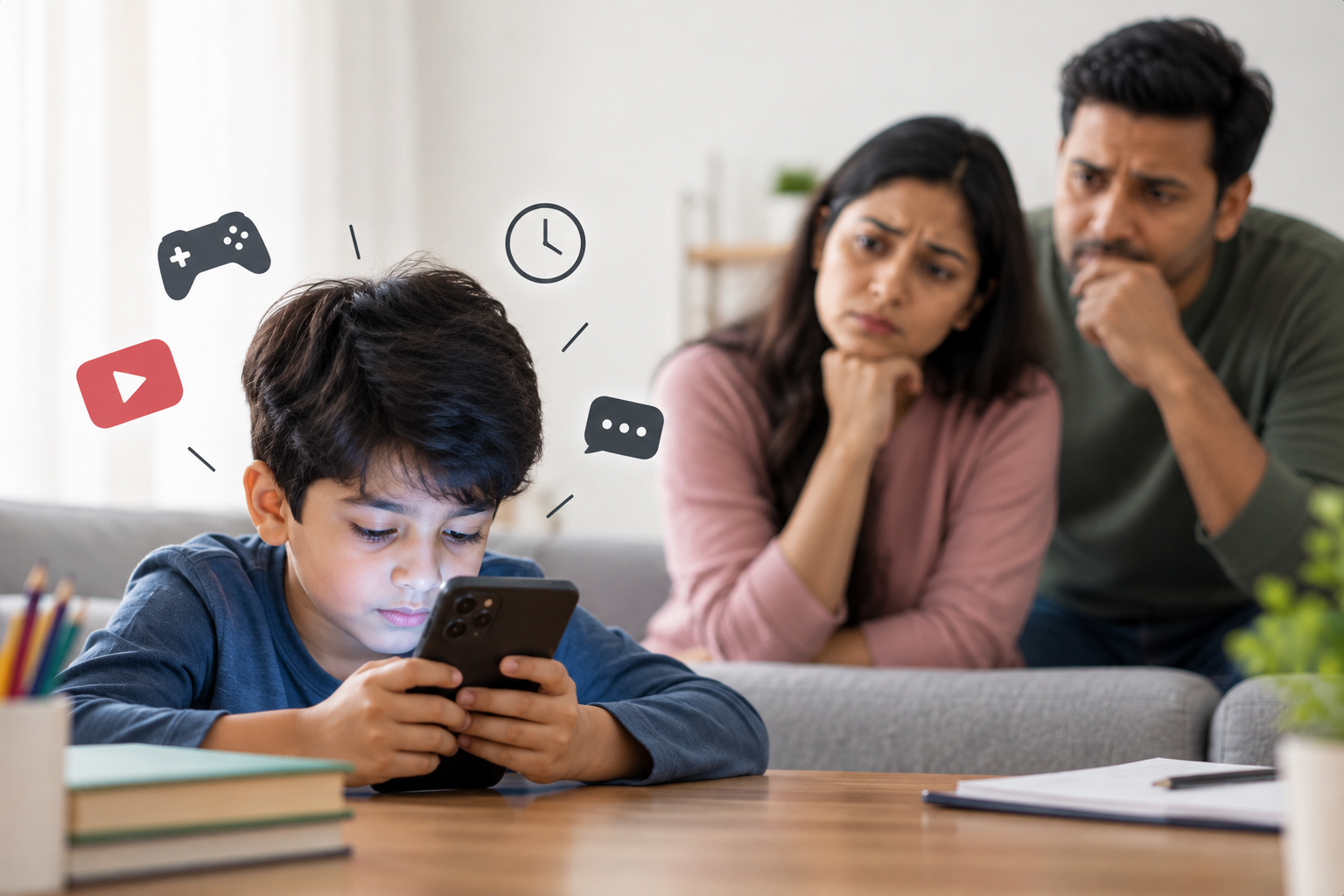
Research suggests excessive screen time may be associated with several areas of concern in some children, though effects vary based on age, content type, timing, amount of use, family environment, sleep, and individual circumstances.
Potential effects may include:
Sleep disruption: Reduced sleep duration and qualityijpediatrics+1
Reduced physical activity: Less time for outdoor play and exercisehakaru+1
Attention and concentration difficulties: Impact on focus during schoolwork
Mood and emotional regulation: Increased irritability or emotional outburstsparents+1
Family relationship strain: Conflicts centered around screen limits
Social interaction changes: Withdrawal from in-person activitiesparents+1
School responsibilities: Homework completion and academic performance may suffer parents.
Research from India found that children with high screen time (>4 hours/day) showed poorer psychological well-being and more disturbed sleep patterns compared to peers with lower use. However, screens don't directly cause mental illness in every child, and many children use devices heavily without significant problems.
Why Do Children Become Overly Dependent on Screens?
Multiple factors can contribute to problematic screen behavior. Understanding these helps parents respond with compassion rather than blame.
Contributing factors may include:
Highly engaging content: Games and apps are designed to capture and hold attention
Easy access: Devices are readily available and portable
Boredom: Screens offer instant entertainment when children lack alternatives
Stress or difficult emotions: Devices provide temporary relief from uncomfortable feelings
Loneliness: Online interaction may feel safer than in-person socializing
Difficulty with emotional regulation: Children haven't yet developed diverse coping strategies
Lack of alternative activities: Limited access to hobbies, sports, or outdoor spaces
Family routines: Inconsistent boundaries or parents' own device habits
Social pressure: Peer groups centered around gaming or social media
Using screens as a consistent calming tool: Children learn to rely on devices whenever upsetparents+1
What Can Parents Do?
Practical, consistent strategies work better than punishment. Here's what research and experts recommend.
Establish predictable screen routines: Set clear times when screens are allowed and when they're not. Consistency helps children know what to expect.
Set clear and consistent boundaries: Define limits around duration, content, and timing. Involve your child in creating a family media plan when age-appropriate.
Avoid screens before bedtime: Turn off all devices at least one hour before sleep to protect natural sleep patterns
Encourage outdoor and physical activities: Provide regular opportunities for active play, sports, or movement.hakaru+1
Create screen-free family periods: Designate meals, car rides, or certain evenings as device-free time for everyone.
Encourage hobbies and offline interests: Support activities your child enjoys that don't involve screens.
Consistency and communication work better than harsh punishment.
When Should Parents Seek Professional Help?
Parents should consider professional guidance when screen-related behavior:
Significantly interferes with sleep despite reasonable boundaries
Affects school performance or attendance
Causes persistent family conflict
Leads to withdrawal from friends or previously enjoyed activities
Is associated with significant mood or behavioral changes
If these patterns persist, parents may consult a qualified child psychologist in Bhubaneswar, child psychiatrist in Bhubaneswar, pediatrician, or other appropriate healthcare professional. A Child Mental Health Specialist in Bhubaneswar can assess whether screen use is part of a broader concern such as anxiety, depression, ADHD, or other conditions requiring specialized support.
Note :- Professional assessment helps distinguish between problematic screen use and clinically diagnosed behavioral or mental-health conditions.
Questions Parents Can Ask Themselves
Use this checklist to reflect on patterns over time:
Is my child's sleep being affected?
Has my child stopped enjoying offline activities they once loved?
Is school performance changing?
Are family conflicts increasingly centered around screens?
Can my child follow reasonable screen boundaries most of the time?
Is my child using screens mainly to escape difficult emotions?
Has behavior changed significantly over weeks or months?
The overall pattern matters more than one isolated behavior. Occasional struggles are normal; consistent impairment warrants attention.
Frequently Asked Questions
1. How do I know if my child is addicted to screens?
Ans :- Look for patterns where screen use consistently interferes with sleep, school, relationships, or emotional well-being. Key signs include inability to stop, intense anger when limits are set, and withdrawal from offline activities. Only a qualified professional can diagnose behavioral conditions.
2. How much screen time is too much for a child?
Ans :- The AAP no longer sets fixed hourly limits for children over 6. Instead, focus on whether screens displace sleep, physical activity, schoolwork, and face-to-face interaction. For ages 2-5, limit to about 1 hour daily of high-quality content.
3. Why does my child get angry when I take away the phone?
Ans :- Strong reactions may indicate your child relies heavily on screens for entertainment, social connection, or emotional regulation. Occasional disappointment is normal, but intense or frequent outbursts suggest the need for clearer boundaries and alternative coping strategies.
4. Can excessive screen time affect a child's mental health?
Ans :- Research shows excessive screen time may be associated with poorer psychological well-being and sleep problems in some children. However, effects vary based on content, timing, individual factors, and family environment. Screens don't automatically cause mental illness.
5. How can I reduce my child's screen time without constant arguments?
Ans :- Establish predictable routines, involve your child in creating a family media plan, offer appealing alternatives, and make changes gradually. Consistent, calm communication works better than sudden restrictions or punishment.
6. When should I seek professional help for screen addiction?
Ans :- Consider professional guidance when screen use significantly impairs sleep, school, relationships, or emotional well-being despite reasonable boundaries. A Child Mental Health Specialist in Bhubaneswar can provide assessment and support tailored to your child's needs.
Conclusion
Frequent screen use doesn't automatically mean addiction. The more important concern is whether device use interferes with your child's sleep, school, relationships, physical activity, emotional well-being, and everyday functioning.
Observe patterns over time, establish healthy boundaries, communicate openly with your child, and model balanced habits. If concerns persist or significantly affect daily life, seeking guidance from a qualified Child Mental Health Specialist in Bhubaneswar can provide personalized support. Professional assessment helps determine whether screen use is part of a broader concern requiring specialized care.
Worried About Your Child's Screen Use?Professional Support Can Help
If you've tried setting boundaries, creating routines, and talking with your child but still see persistent problems with sleep, school, mood, or family relationships, professional support may be the next step. Seeking help doesn't mean you've failed as a parent—it means you're taking proactive steps to protect your child's well-being.
A qualified Child Mental Health Specialist in Bhubaneswar can conduct a comprehensive assessment to understand what's driving the problematic screen behavior. Sometimes excessive screen use is a symptom of underlying concerns such as anxiety, depression, ADHD, learning difficulties, or social challenges. In other cases, it may be primarily a behavioral pattern that responds well to structured interventions.
Meet Your Child Health Specialist : Dr Saiprasad Ray

Dr. Saiprasad Ray is a dedicated psychiatrist based in Bhubaneswar, known for his compassionate, patient-first care. He creates a safe, judgment-free space to help individuals navigate anxiety, mood disorders, and emotional struggles, guiding them toward lasting mental well-being with personalized, empathetic support.
Visit Our Clinic:-
Anandam Psychiatric Wellness Clinic in Bhubaneswar
Address :- Infront Of Odisha Hotel, Before Ravi Talkies Square, Plot No 3766, Lewis Rd, Nageswar Tangi, Old Town, Bhubaneswar, Odisha 751014
Call :- 93371 32129
Email :- drsaiprasad.psychiatrist@gmail.com.
Visit Location :- https://maps.app.goo.gl/uAaDZmy7ziMeGzLE7
Book an appointment today and get your child a proper mental health treatment