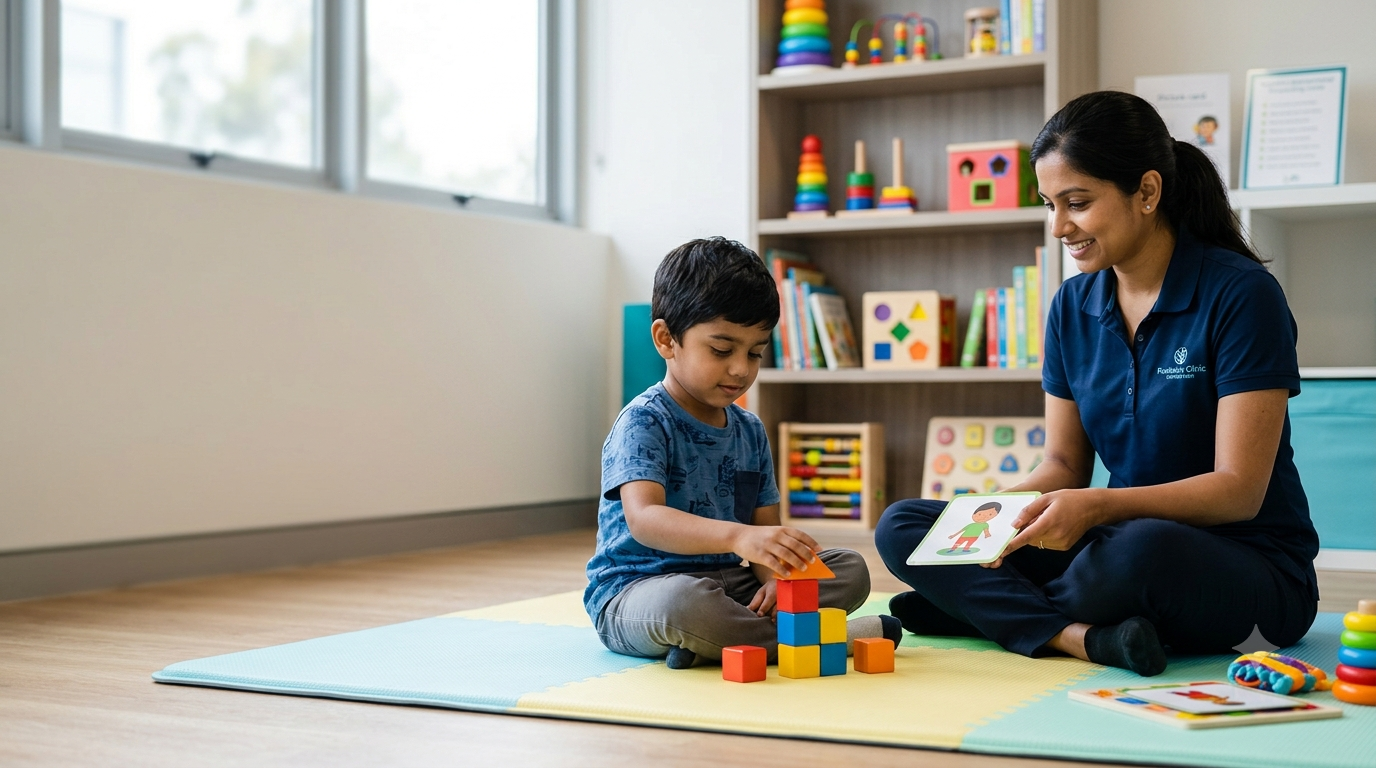
Do you find yourself worrying about your child's speech? Perhaps they don't respond when you call their name, or they seem more interested in spinning the wheels of a toy car than playing with it. Many parents notice these subtle differences and wonder if they are just a phase or a sign of something more.
For many parents in India, the journey to understanding Autism Spectrum Disorder (ASD) begins with a quiet concern that something might be different. You are not alone in this, and your observations matter. This guide is designed to help you understand the early signs of autism, what to look for, and when to seek professional help from an autism specialist in Bhubaneswar.
What is Autism?
Autism Spectrum Disorder is a neurodevelopmental condition that affects how a child's brain develops, particularly in the areas of social communication, interaction, and behaviour . The word "spectrum" is important here it means that autism affects each child differently, with a wide range of strengths, abilities, and support needs .
Autism is not a disease, an illness, or a result of bad parenting . It is simply a different way of experiencing and interacting with the world. Children with autism often have unique talents and ways of thinking.
Early Signs of Autism Every Parent Should Know
The early signs of autism usually appear before a child is three years old . While every child develops at their own pace, certain patterns of behaviour may warrant a conversation with a healthcare professional. Here are the key areas to watch:
1.Communication Signs
Communication is more than just talking; it includes all the ways we express ourselves and understand others. Look out for:
Delayed Speech: Not using single words by 15-18 months or two-word phrases by 24 months .
Limited Gestures: Not pointing, waving "bye-bye," or using other gestures to communicate needs by 12 months .
Echolalia (Repeating): Repeating words or phrases from movies or conversations without using them functionally .
Not Responding to Their Name: A child may appear to ignore you when you call their name, which can be mistaken for a hearing problem .
Lack of Joint Attention: Not pointing to show you something interesting or looking back and forth between an object and you to share the experience .
2.Social Interaction Signs
Social skills are about connecting with others. Watch for a child who:
Avoids Eye Contact: Shows limited or no eye contact during interactions .
Prefers to Play Alone: Shows little interest in other children and may prefer solitary play .
Doesn't Share Enjoyment: Doesn't show or bring objects to parents to share their interest .
Lacks "Make-Believe" Play: Doesn't engage in pretend play, like feeding a doll or cooking with toy food .
3.Behavioural and Sensory Signs
Children with autism may have patterns of behaviour or sensory sensitivities that are different from their peers. This can include:
Repetitive Movements: Such as hand-flapping, rocking, or spinning .
Strong Preference for Routine: Becoming very distressed by even small changes in their daily routine or environment .
Intense Interests: Showing an unusually intense focus on a specific topic or object (e.g., trains, numbers, or maps) .
Sensory Sensitivities: Being overly sensitive to sounds, lights, textures, or smells, or conversely, seeking out intense sensory input .
4.A Critical Sign: Regression
About 25% of children with autism may show a regression in their skills . This means they may develop some words or social skills and then gradually or suddenly lose them, usually between 15 and 24 months of age . If this happens, it is a significant sign to discuss with a doctor immediately.
What Are the Early Signs of Autism in Toddlers?
For toddlers (1-3 years), the signs become more noticeable as language, social play, and daily routines take centre stage. Specific signs to watch for include :
Loss of words or skills they previously had.
Not using two-word phrases by 24 months.
A preference for playing alone and showing little interest in other children.
Lining up toys repeatedly instead of using them in creative play.
Unusual reactions to sounds, textures, lights, or tastes.
Limited or no pretend play by 18 months.
Autism Signs vs Normal Development: When to know symptoms.
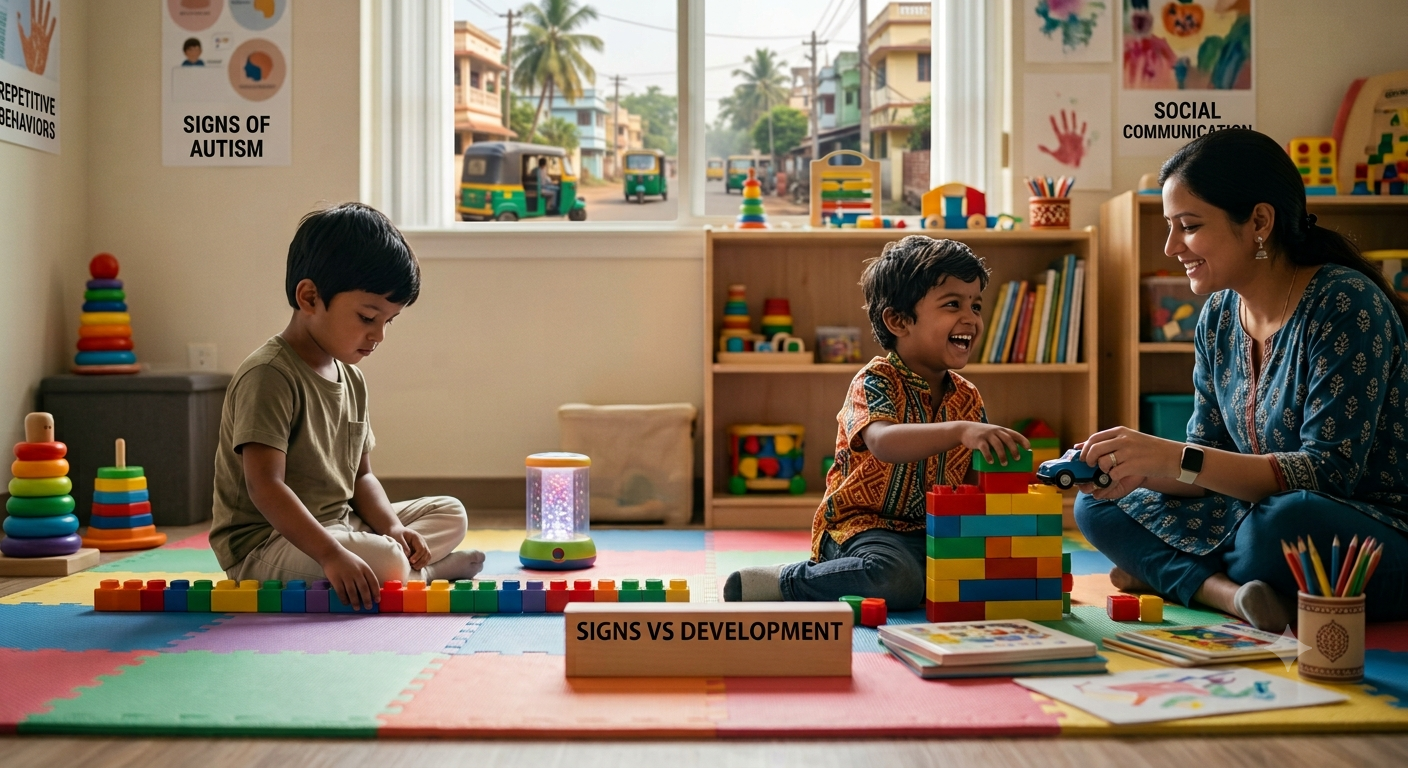
It's normal for parents to wonder, "Is this just a phase?" Many children may show one or two of these behaviour occasionally. For example, some toddlers are naturally shy, have a speech delay, or love to line up their cars. This does not automatically mean they have autism .
The difference often lies in the pattern and persistence of these behaviour. A child who has a speech delay but makes eye contact, points to show you things, and tries to interact with others may just have a language delay. However, when these signs occur together for instance, a child has a speech delay and avoids eye contact & doesn't point to share interest it is a stronger reason to seek an evaluation .
When Should Parents Consider Autism Screening?
You should consider speaking to a qualified healthcare professional if you notice :
A loss of previously acquired language or social skills.
Persistent concerns about your child's communication or social interaction.
A lack of response to their name.
A combination of the signs listed above.
You have a gut feeling that something is not right.
You do not need to be certain something is wrong before seeking advice. Trust your instincts as a parent. You know your child best.
What Happens During an Autism Screening?
Screening is the first step to understand if a child might be at risk for autism. In India, pediatricians and healthcare providers often use screening tools like the Modified Checklist for Autism in Toddlers (M-CHAT) . The Indian Academy of Pediatrics recommends that all children be screened for autism at their 18- and 24-month well-child checkups .
The screening process is not a diagnosis. It typically involves a parent or caregiver completing a questionnaire about the child's development, communication, and behaviour . If the screening suggests a risk, the child is then referred for a comprehensive diagnostic assessment .
How Is Autism Diagnosed?
Autism is diagnosed through a comprehensive assessment by a team of qualified professionals, which may include a developmental pediatrician, a child psychiatrist, a clinical psychologist, or a psychiatrist in Bhubaneswar .
A proper diagnosis involves :
A detailed interview about the child's developmental history and behaviour.
Observation of the child's social interaction, communication, and play.
The use of validated diagnostic tools like the Indian Scale for Assessment of Autism (ISAA) .
There is no single blood test or brain scan that can diagnose autism .
Why Early Identification and Intervention Matter
Research consistently shows that early identification and intervention, ideally before the age of 3-5 years, can lead to significantly better outcomes for children . Early intervention helps build neural connections during the critical period of brain development .
Early intervention may include:
Speech and language therapy.
Occupational therapy.
Applied Behaviour Analysis (ABA).
Social skills training.
Parent training programs to help families support their child's development at home
What Parents Can Do If They Notice Warning Signs
If you are concerned, here are some practical steps you can take:
Track Your Concerns: Write down specific behaviour that worry you. Note when they happen and how often.
Talk to Your Child's Pediatrician: Discuss your concerns with your child's doctor. They can guide you on the next steps and connect you with the right autism specialist in Bhubaneswar.
Don't Wait: It's always better to act early. Even if it turns out to be a false alarm, you will have peace of mind.
Avoid Self-Diagnosis: The internet can be overwhelming. It's important to rely on professional evaluation, not online checklists or social media.
Seek Support: Connect with support networks for parents of children with autism.
Frequently Asked Questions(FAQ) about Autism Treatment
1. What are the early signs of autism in a child?
Ans :- Common signs include delayed speech, limited eye contact, not responding to their name, a preference for playing alone, repetitive movements like hand-flapping, and strong reactions to sensory input like sounds or lights.
2. At what age can autism signs become noticeable?
Ans :- Signs usually become apparent in the first two to three years of life, often before age 2. However, in some cases, they may not be noticed until a child is older.
3. What are the signs of autism in toddlers?
Ans :- In toddlers (1-3 years), key signs include a loss of previously acquired words or skills, no two-word phrases by 24 months, lining up toys repetitively, and becoming very distressed by small changes in routine.
4. Does delayed speech always mean autism?
Ans :- No. Many children with speech delays do not have autism. However, when speech delay is combined with other signs like a lack of eye contact, not pointing, and social withdrawal, it is a reason to seek an evaluation.
5. Can a child have autism without speech delay?
Ans :- Yes. Some children with autism may have age-appropriate speech but struggle with social communication, like understanding social cues, taking turns in conversation, or interpreting body language.
6. How is autism screened?
Ans :- Screening is done using parent-completed questionnaires like the M-CHAT during well-child checkups. It helps identify children who may need a more comprehensive assessment for autism.
7. Is autism screening the same as diagnosis?
Ans :- No. Screening is a preliminary step to check for risk. A diagnosis requires a comprehensive, in-depth assessment by a team of qualified professionals like developmental pediatricians, child psychiatrists, or clinical psychologists.
8. When should parents seek professional help?
Ans :- Parents should seek professional help if they have persistent concerns about their child's development, especially if they notice a loss of skills, a lack of response to their name, or a combination of communication and social difficulties.
9. Can autism be treated or managed?
Ans :- While there is no "cure" for autism, evidence-based interventions like speech therapy, occupational therapy, and behavioural support can significantly help children build skills and reach their full potential.
Conclusion
Every child develops at their own pace, and one sign alone does not diagnose autism. However, if you have ongoing concerns about your child's communication, social interaction, or behaviour, it is always wise to seek professional guidance. Acting early can make a world of difference in supporting your child's unique journey. As a parent, your love, attention, and early action are the most powerful tools you have.
A Doctor's Perspective: When Should Parents Act on Developmental Concerns?
As a psychiatrist, I often meet parents who tell me, 'We thought he would outgrow it.' When it comes to autism, waiting is not the best strategy. If you have persistent concerns about your child's speech, social interaction, or behaviour especially if they seem to be losing skills they once had it is a clear sign to act. Early screening and assessment are not about labeling a child; they are about understanding their unique needs and giving them the best possible support from the very start.
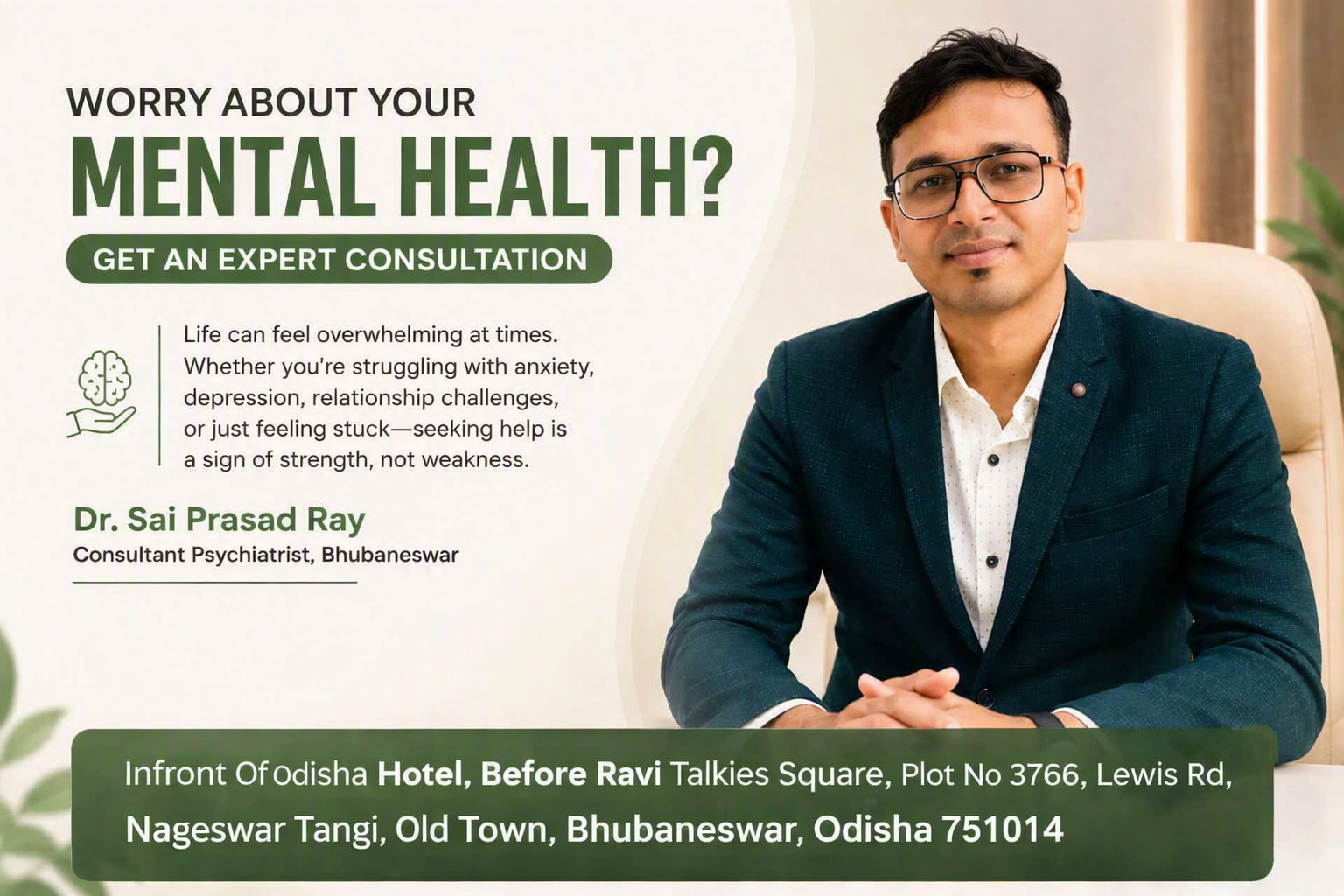
Dr. Saiprasad Ray
Consultant Psychiatrist
MBBS, MD (Psychiatry)
Anandam Psychiatry & Wellness Clinic
Infront Of Odisha Hotel, Before Ravi Talkies Square, Plot No 3766, Lewis Rd, Nageswar Tangi, Old Town, Bhubaneswar, Odisha 751014.
Call :- +91 93371 32129
Visit Location :- https://maps.app.goo.gl/nLtg9ydPxbjx49Az6
Disclaimer:- The information provided in this blog is intended for general educational and informational purposes only. It is not intended to replace professional medical advice, diagnosis, or treatment from a qualified healthcare professional.