
Priya had always been a careful person. She double-checked that the front door was locked before leaving for work. She washed her hands thoroughly after coming home. But over time, these small habits grew into something much larger. She found herself checking the door not once or twice, but five times before she could leave. She washed her hands until they felt raw and sore. Her mind was flooded with unwanted thoughts that she could not seem to shake.
She knew her behaviour was excessive. She felt exhausted and embarrassed. But the anxiety of not performing these rituals was overwhelming. Priya was experiencing symptoms of Obsessive Compulsive Disorder (OCD) a condition that affects millions of people worldwide, yet is often misunderstood and hidden in silence.
If you or someone you know is struggling with persistent, intrusive thoughts and compulsive behaviour, you are not alone. There is hope and effective treatment available. One of the most widely recommended therapies for OCD is Exposure and Response Prevention (ERP). For those in Bhubaneswar seeking professional support, an ERP treatment clinic in Bhubaneswar can provide expert guidance and evidence-based care tailored to individual needs.
What Is Exposure and Response Prevention (ERP)?
Exposure and Response Prevention, commonly known as ERP, is a structured, evidence-based psychological therapy designed specifically to help people with OCD. It is considered the gold standard treatment for obsessive-compulsive disorder and is recommended by leading mental health organizations worldwide.
The name itself describes the two core components of the therapy:
Exposure: This involves intentionally and gradually confronting the thoughts, situations, objects, or triggers that cause anxiety or distress. For example, someone with a fear of contamination might be asked to touch a doorknob without immediately washing their hands.
Response Prevention: This involves deliberately resisting the urge to perform the compulsive behaviour or ritual that usually follows the trigger. Instead of washing hands immediately, the person learns to tolerate the anxiety without acting on it.
Over time, this process helps the brain learn that the feared outcome does not occur, and the anxiety gradually decreases. ERP is not about eliminating anxiety entirely but about building the skills to manage it without resorting to compulsive behaviour.
How Does ERP Therapy Work for OCD?
ERP therapy is typically conducted in a structured, step-by-step manner with a trained mental health professional. The process generally involves:
1. Identifying Triggers and Compulsions
The first step is understanding what specific thoughts, situations, or objects trigger anxiety and what behaviour follow. This is often done through discussion and self-monitoring.
2. Developing a Treatment Hierarchy
Together with the therapist, the individual creates a list of anxiety-provoking situations, ranked from least distressing to most distressing. This is called a hierarchy or fear ladder.
3. Gradual Exposure
The person is guided to gradually face the situations on their hierarchy, starting with the least anxiety-provoking items. Each exposure is repeated until the anxiety reduces significantly.
4. Resisting Compulsions
During exposure, the individual is encouraged to resist performing their usual compulsive response. This is the "response prevention" part of the therapy. With repeated practice, the anxiety response diminishes.
5. Learning Healthier Responses
Over time, the individual learns that they can tolerate anxiety without performing rituals. This builds confidence and breaks the cycle of fear and compulsion.
The therapy is always conducted at a pace that the individual can manage. It is not about overwhelming the person but about helping them gradually build resilience.
What Symptoms Can ERP Help With?
Exposure and Response Prevention can help individuals experiencing a wide range of OCD symptoms, including:
Repeated checking – Constantly checking that doors are locked, appliances are turned off, or that no harm has occurred.
Excessive cleaning or washing – Fear of contamination leading to compulsive hand-washing, cleaning, or avoidance of perceived contaminants.
Reassurance-seeking – Repeatedly asking others for confirmation that things are safe or okay.
Intrusive unwanted thoughts – Disturbing thoughts about harm, violence, sexuality, or religion that cause significant distress.
Counting or repeating rituals – Performing actions a specific number of times or in a specific sequence to prevent a feared event.
Avoidance – Avoiding people, places, or situations that might trigger obsessive thoughts.
Symmetry and order – Needing things to be arranged in a precise, balanced, or orderly manner.
It is important to note that ERP should be personalised to the individual's specific symptoms and concerns. What works for one person may not be appropriate for another.
Why Do People Avoid Seeking Help for OCD?
Despite the availability of effective treatments like ERP, many people with OCD do not seek professional help. There are several reasons for this:
Stigma and shame – Many people feel embarrassed about their symptoms and worry about being judged.
Fear of being misunderstood – Some fear that others will not understand what they are going through.
Believing symptoms are just a habit – Some people think they should be able to stop their behaviour through willpower alone.
Assuming they can manage alone – Many try to hide their symptoms and manage them privately, often without success.
Lack of awareness – Some do not know that effective treatment exists or where to find it.
These concerns are understandable, but they should not prevent anyone from seeking the help they deserve. OCD is a medical condition, not a personal failing, and effective treatments are available.
When Should You Consult a doctor?
It is not always easy to know when occasional worries or habits cross the line into a condition that requires professional attention. However, you should consider consulting a qualified mental health professional if:
Obsessions or compulsions are frequent or difficult to control – You feel driven to perform rituals even when you know they are excessive.
Symptoms take significant time each day – You spend an hour or more each day on obsessive thoughts or compulsive behaviour.
OCD interferes with daily life – Your symptoms affect your ability to work, study, maintain relationships, sleep, or manage daily tasks.
You avoid situations because of obsessive fears – You stop going to certain places or engaging in activities because they trigger anxiety.
Symptoms are causing significant emotional distress – You feel anxious, depressed, or overwhelmed because of your symptoms.
Symptoms are becoming more severe – Your rituals or obsessions are getting worse over time.
Self-management is not helping – You have tried to control your symptoms on your own, but they persist or worsen.
It is important to understand the difference between occasional worries and persistent symptoms that may require professional assessment. Only a qualified mental health professional can determine whether your symptoms meet the criteria for OCD and what treatment approach may be most appropriate.
Who Can Provide ERP Treatment?
ERP therapy is typically provided by qualified mental health professionals who have received specific training in this approach. These may include:
Psychiatrists – Medical doctors who specialise in mental health. They can diagnose OCD, provide therapy, and evaluate whether medication may be appropriate.
Clinical Psychologists – Trained in psychological assessment and therapy, including ERP.
Licensed Therapists or Counsellors – Mental health professionals with specialized training in CBT and ERP.
A comprehensive treatment plan may involve both therapy and, in some cases, medication. A psychiatrist can evaluate whether medication could be a helpful addition to therapy.
Is ERP Suitable for Everyone With OCD?
ERP is one of the most effective treatments for OCD, but it is not a one-size-fits-all solution. The therapy should be tailored to the individual's specific symptoms, severity, and personal circumstances.
Some people may find ERP challenging, particularly in the early stages, as it involves facing anxiety-provoking situations. However, with the support of a trained professional and a gradual approach, most people are able to tolerate and benefit from the therapy. A thorough assessment by a qualified professional is important before starting any treatment.
Conclusion
Priya eventually found her way to a mental health professional who introduced her to ERP therapy. It was not easy at first. Facing her fears felt overwhelming. But with time, patience, and consistent support, she began to notice a change. The anxiety that once felt unbearable started to lose its grip. She no longer felt ruled by her compulsions.
Exposure and Response Prevention is a powerful, evidence-based treatment that can help individuals with OCD lead fuller, less restricted lives. If you are experiencing persistent obsessive thoughts or compulsive behaviour, do not wait until your symptoms become unmanageable. Consider consulting a qualified mental health professional in Bhubaneswar for an appropriate assessment and treatment plan. At an ERP treatment clinic in Bhubaneswar, you can find the compassionate, expert care you deserve.
Feeling Overwhelmed? Your Mental Health Matters.
Life can feel difficult sometimes. Anxiety, depression, relationship challenges, or simply feeling stuck can affect how you think, feel, and live each day.
You Don’t Have to Face It Alone seeking professional help is a sign of strength, not weakness.
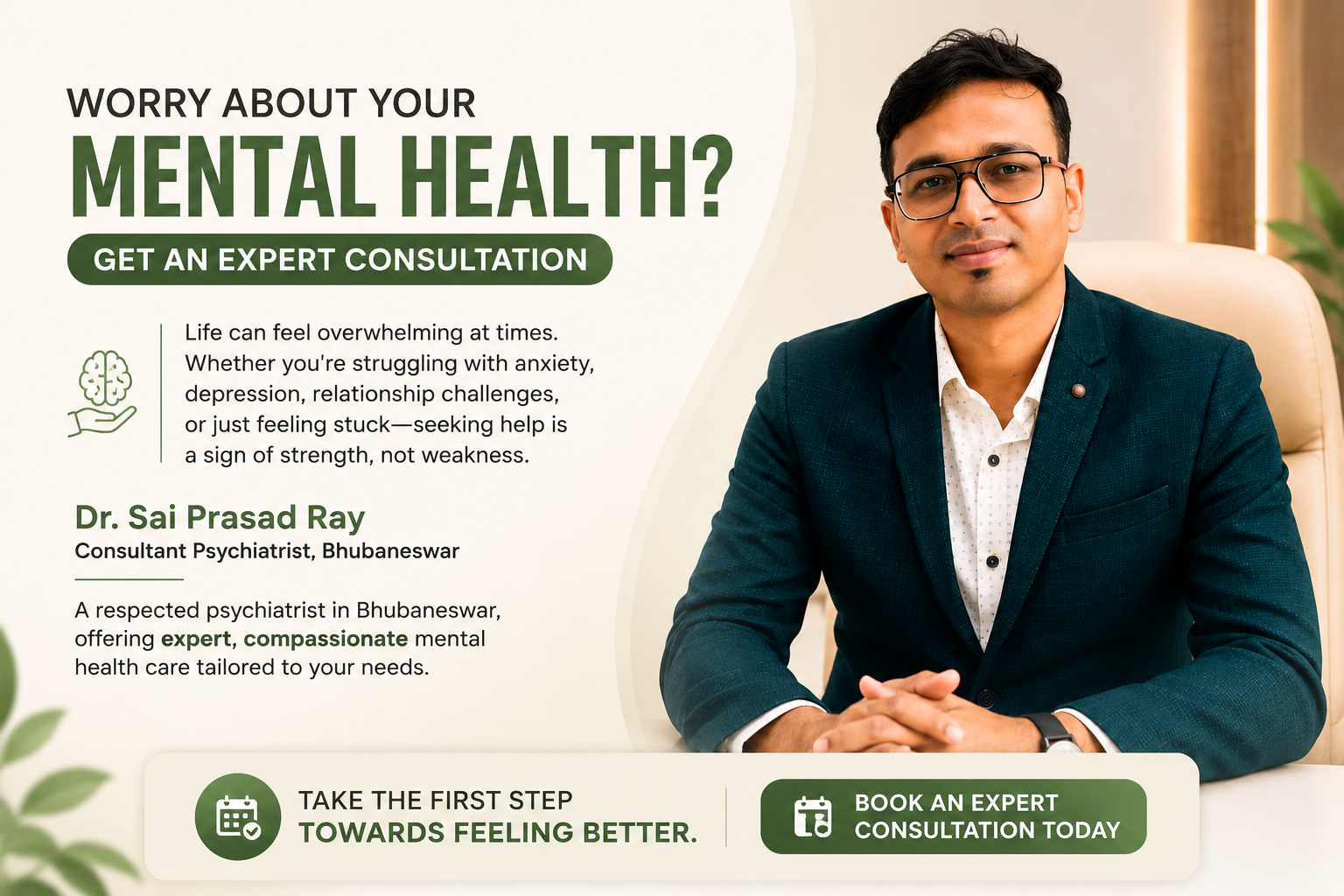
Dr. Sai Prasad Ray, Psychiatrist in Bhubaneswar, provides expert, compassionate mental health care tailored to your individual needs.
Take the first step towards feeling better.
Book an Expert Consultation Today
Anandam Psychiatry & Wellness Clinic
Address: Infront Of Odisha Hotel, Before Ravi Talkies Square, Plot No 3766, Lewis Rd, Nageswar Tangi, Old Town, Bhubaneswar, Odisha 751014
Call: +91 9337132129
Book an appointment
Disclaimer: The information provided in this blog is intended for general educational and informational purposes only. It is not intended to replace professional medical advice, diagnosis, or treatment from a qualified healthcare professional.