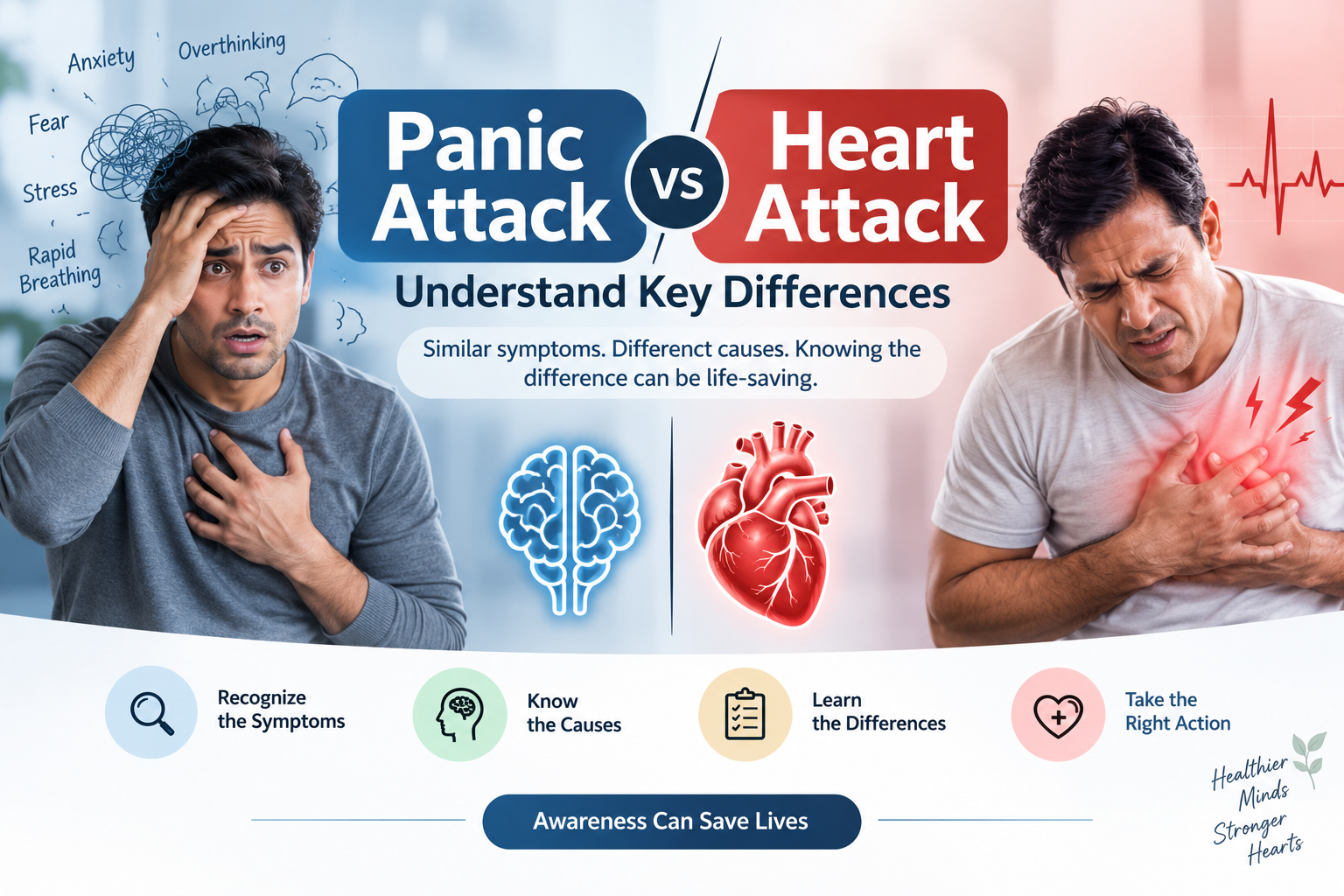
Imagine this: you are sitting at your desk, working on an important project, when suddenly your heart starts racing. Your chest feels tight, you break out in a cold sweat, and you find it hard to catch your breath. A wave of intense fear washes over you. Your mind immediately jumps to the worst-case scenario: Am I having a heart attack?
This is a frighteningly common experience. The symptoms of a panic attack and a heart attack can feel terrifyingly similar, leaving you unsure whether you are experiencing a life-threatening medical emergency or an intense anxiety episode . Both conditions can cause chest pain, a pounding heart, shortness of breath, and sweating .
Understanding the key differences between a panic attack and a heart attack is crucial for your health and peace of mind. This guide will help you distinguish between the two, recognize warning signs, and know when to seek emergency medical care or panic attack treatment in Bhubaneswar.
What is Panic Attack?
A panic attack is a sudden, intense episode of overwhelming fear or anxiety that triggers severe physical reactions, even when there is no real danger or apparent trigger . It is your body's "fight or flight" response going into overdrive.
Panic attacks can happen to anyone, but they are more common in people with anxiety disorders. They typically peak in intensity within minutes and usually subside within 20 to 30 minutes .
Common symptoms of a panic attack include:
Chest pain or discomfort, often described as sharp or stabbing
Rapid, pounding heartbeat
Shortness of breath or a feeling of being smothered
Sweating, trembling, or shaking
Dizziness, lightheadedness, or feeling faint
Nausea or abdominal distress
Numbness or tingling sensations in the hands or fingers
A sense of impending doom or a feeling of losing control
Panic attacks can be triggered by extreme stress, specific situations, or even occur out of the blue. While they are not life-threatening, they can be incredibly distressing .
What Is a Heart Attack?
A heart attack, medically known as a myocardial infarction, occurs when blood flow to a part of the heart muscle is blocked, usually by a blood clot. This blockage prevents oxygen from reaching the heart, causing damage to the heart muscle . A heart attack is a life-threatening medical emergency that requires immediate treatment .
Common symptoms of a heart attack include:
Chest pain or discomfort, often described as pressure, squeezing, tightness, or a feeling of fullness in the centre of the chest
Pain or discomfort that radiates to the arm (one or both), back, neck, jaw, or stomach
Shortness of breath, which may occur with or without chest discomfort
Breaking out in a cold sweat
Nausea or vomiting
Light-headedness or feeling faint
Unusual tiredness or weakness
Heart attack symptoms can come on suddenly or develop gradually and persist for more than a few minutes. They do not go away with rest or calming techniques .
Can a Panic Attack Feel Like a Heart Attack?
Yes, absolutely. A panic attack can feel so physical and frightening that many people believe they are having a heart attack. During a panic attack, your body releases adrenaline, which can cause your heart to race, your chest to feel tight, and your breathing to become rapid and shallow . These intense physical sensations can mimic the symptoms of a heart attack, making it extremely difficult to tell the difference based on symptoms alone .
It is common for people with no history of heart problems to visit the emergency room fearing a heart attack, only to be diagnosed with a panic attack . This is why it is crucial never to assume chest pain is "just anxiety."
When Is Chest Pain an Emergency?
Any new or unexplained chest pain should be treated as a medical emergency. Do not hesitate to call for help if you experience any of the following:
Chest pain or pressure that lasts more than a few minutes
Pain that radiates to your arm, jaw, back, neck, or stomach
Chest pain accompanied by shortness of breath, cold sweats, nausea, or light-headedness
Chest pain that is severe, sudden, or worsening
If you are in doubt, err on the side of caution and seek emergency help immediately. For Indian readers, dial 112 - India's unified emergency helpline number for police, fire, and ambulance services . Do not drive yourself to the hospital if emergency transport is available.
How Doctors Tell the Difference
When you arrive at the emergency room with chest pain, doctors will not rely on your symptoms alone to make a diagnosis. They will use a combination of medical tests to determine the cause of your pain . These may include:
Electrocardiogram (ECG/EKG): This test records the electrical activity of your heart and can help detect if a heart attack is occurring.
Blood Tests: Doctors will check for cardiac troponin, a protein that is released into the bloodstream when heart muscle is damaged. Elevated troponin levels are a strong indicator of a heart attack.
Medical History and Physical Exam: Your doctor will ask about your symptoms, medical history, risk factors for heart disease, and any history of anxiety or panic attacks.
How Are Panic Attacks Managed?
If you are experiencing recurrent panic attacks, effective management is available. A mental health professional, such as a psychiatrist, can provide support and treatment. Treatment options may include:
Psychotherapy (Talk Therapy): Cognitive-behavioural therapy (CBT) is a highly effective approach that helps you identify and change negative thought patterns and behaviour that trigger panic attacks.
Lifestyle Modifications: Learning stress management techniques, regular physical activity, and getting adequate sleep can help reduce the frequency and intensity of panic attacks.
Medication: In some cases, a psychiatrist may prescribe medications to help manage symptoms and prevent future panic attacks. These are always used in conjunction with therapy.
Frequently Asked Questions(FAQ)
1. How can I tell a panic attack from a heart attack?
Ans :- While it can be difficult, key differences include the nature of the pain (sharp vs. squeezing), duration (short-lived vs. persistent), and triggers (emotional stress vs. physical exertion). However, only a medical professional can make a definitive diagnosis.
2. Can panic attacks cause chest pain?
Ans :- Yes, chest pain is a common symptom of a panic attack. It is often described as sharp or shooting and usually resolves as the panic attack passes.
3. Can anxiety cause a fast heartbeat?
Ans :- Yes, anxiety can cause a rapid heartbeat (palpitations), which can feel like your heart is pounding or racing.
4. Does a heart attack always cause severe chest pain?
Ans :- No. Some people, especially women, may have less typical symptoms and may not experience severe chest pain at all. Symptoms can include jaw pain, back pain, nausea, and extreme fatigue.
5. How long does a panic attack usually last?
Ans :- Panic attacks typically peak within 10 minutes and most symptoms resolve within 20 to 30 minutes.
6. Can a heart attack happen without chest pain?
Ans :- Yes. This is known as a "silent" heart attack. It is more common in women, older adults, and people with diabetes. Symptoms may include shortness of breath, fatigue, and nausea.
7. When should I seek emergency help for chest pain?
Ans :- Seek emergency help immediately (dial 112 in India) if you have sudden, severe, or unexplained chest pain, especially if it lasts more than a few minutes, radiates to your arm or jaw, or is accompanied by shortness of breath, nausea, or cold sweats. .
Conclusion
The key takeaway is that while a panic attack and a heart attack are not the same condition, their symptoms can overlap significantly. Do not attempt to self-diagnose. If you experience any symptoms that could indicate a heart attack, treat it as a medical emergency and seek immediate professional help. Prompt medical evaluation is more important than trying to figure out the cause yourself.
For those who experience recurrent panic attacks, effective help is available. A mental health professional can provide treatment and support to help you manage your symptoms and improve your quality of life. Whether you are facing a medical emergency or a mental health challenge, prioritizing your health is always the right choice.
From Panic to Peace: Your Journey to Calm Begins Here
Your heart is racing. Your chest feels tight. Your mind is screaming that something is terribly wrong.
In that moment, all you want is for someone to tell you—You're going to be okay.
At Anandam Psychiatry & Wellness Clinic, we understand exactly how terrifying panic attacks can feel. We also know that beneath the fear lies a simple truth: you are not broken, and you are not alone.
Imagine walking into a space where the lights are warm, the atmosphere is calming, and the person sitting across from you truly understands. No judgment. No rush. Just genuine, compassionate care designed to help you breathe again.
That's what we offer.
Meet Dr. Saiprasad Ray
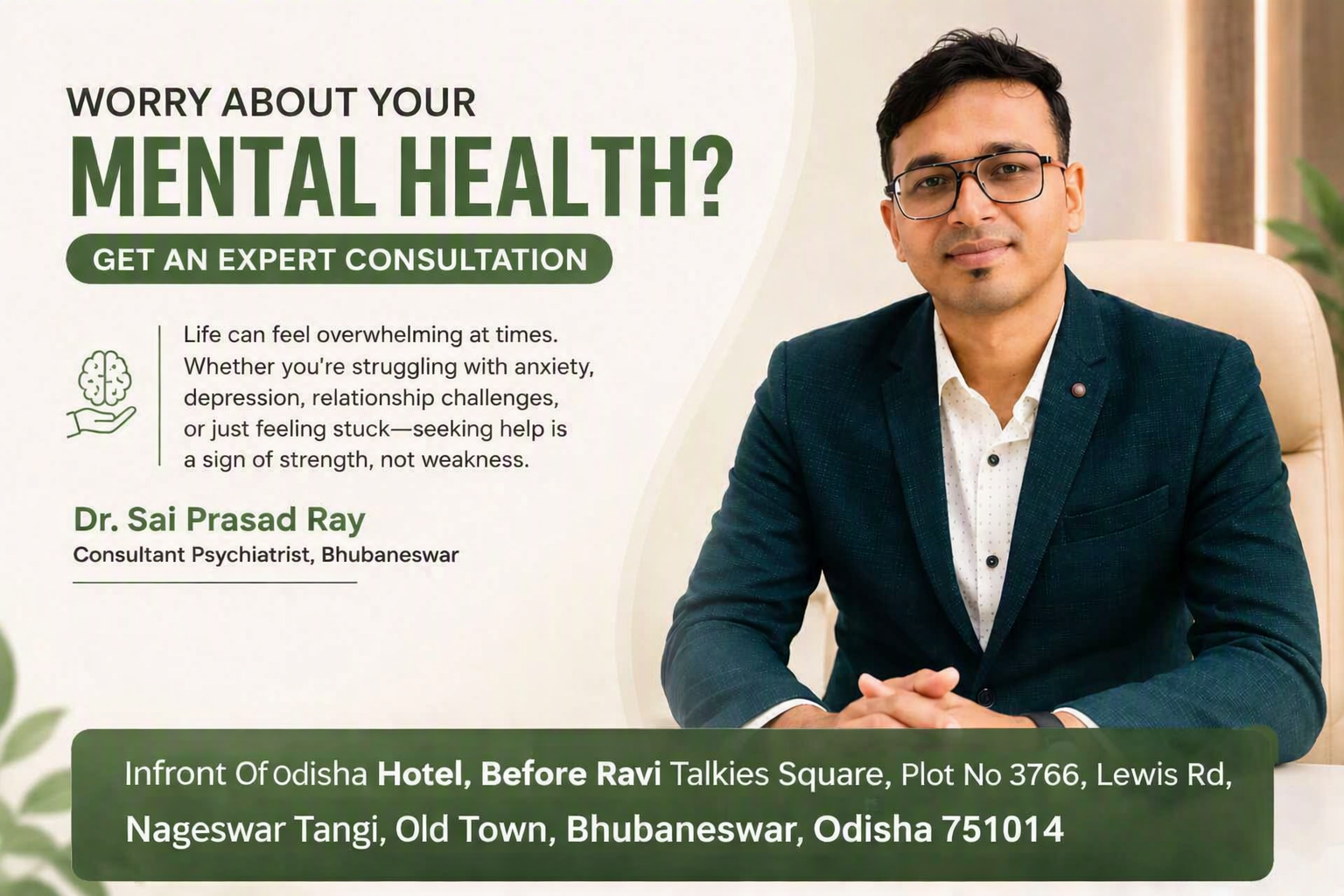
Dr. Saiprasad Ray is a distinguished psychiatrist in Bhubaneswar, dedicated to providing compassionate, evidence-based mental health care. With extensive experience in treating anxiety disorders, panic attacks, depression, and a wide range of psychiatric conditions, Dr. Ray is committed to helping individuals reclaim their mental well-being.
Dr. Ray has been associated with the Department of Psychiatry at Sum Hospital and has contributed to mental health awareness programs in the community. He is also listed among the experienced psychiatrists offering compassionate care through a network of qualified professionals.
Clinic Address :-
ANANDAM PSYCHIATRY & WELLNESS CLINIC
Address: Infront Of Odisha Hotel, Before Ravi Talkies Square,
Plot No 3766, Lewis Rd, Nageswar Tangi, Old Town,
Bhubaneswar, Odisha 751014
Phone: +91 9337132129
Map Link: https://maps.app.goo.gl/TrXLv9JviCS4QkXS9
Book an appointment
Disclaimer :- The information provided in this blog is intended for general educational and informational purposes only. It is not intended to replace professional medical advice, diagnosis, or treatment from a qualified healthcare professional.