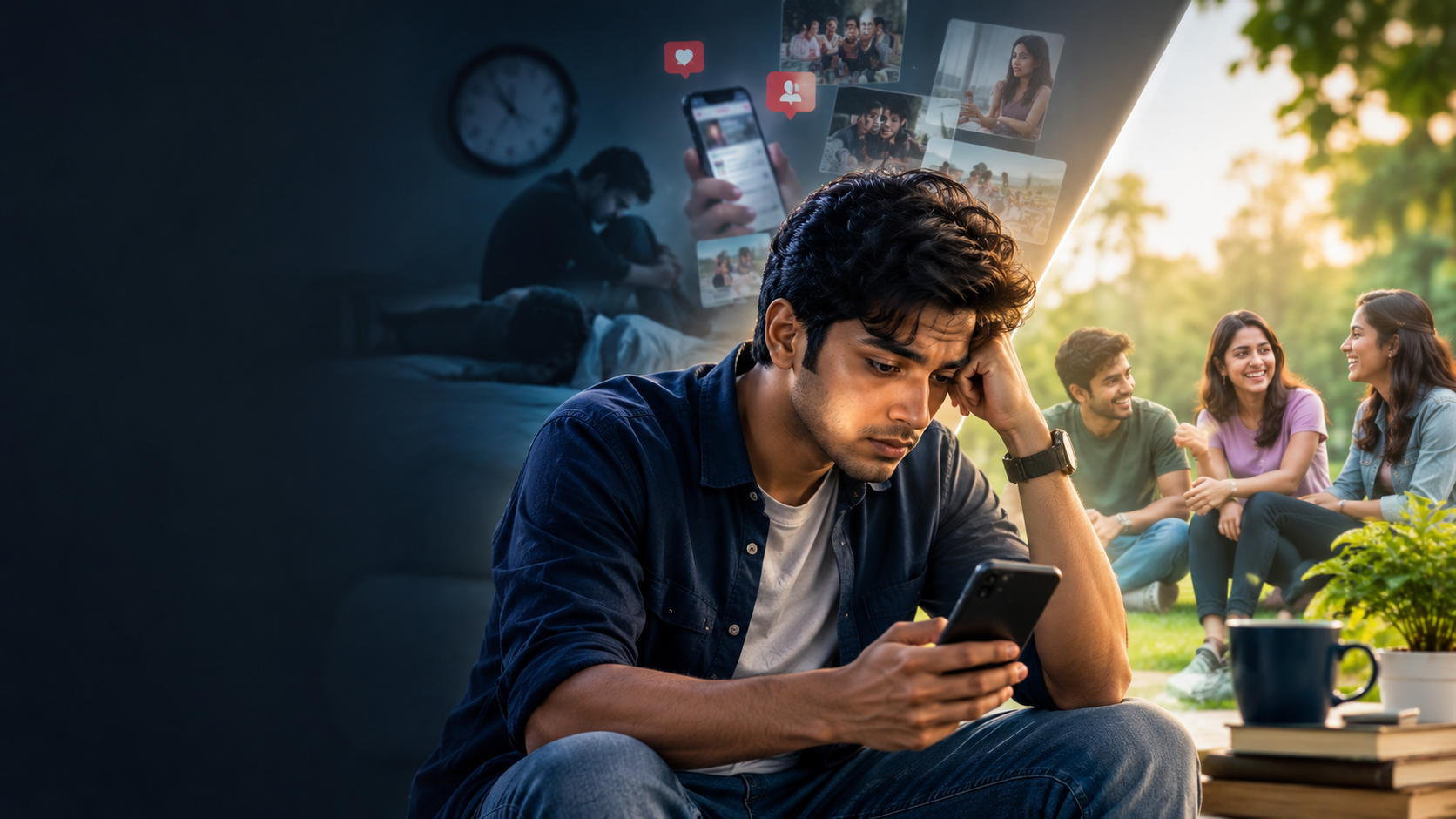
Do you find yourself reaching for your phone the moment you wake up? Do you scroll through Instagram or WhatsApp while having your morning tea, during lunch, and even late at night? You are not alone. For many of us in India, from teenagers and young adults to working professionals and parents, social media has become a fundamental part of our daily routine. While it helps us stay connected with friends, family, and the world, the constant presence of social media in our lives can have a significant impact on our mental health.
This article explores the complex relationship between social media and mental health, looking at both the positive and negative effects. We will also discuss practical steps to build a healthier relationship with your devices and recognize when it might be time to seek professional support, like talking to a psychiatrist in Bhubaneswar.
What Is the Connection Between Social Media and Mental Health?
Research shows that social media can both promote and hinder well-being . The impact it has on you depends on several factors, including your personality, what kind of content you consume, and how much time you spend online . It’s important to remember that social media isn't inherently "good" or "bad." Its effect is more like a double-edged sword.
The connection lies in how these platforms influence our emotions, thoughts, and behaviour. For instance, a positive comment from a friend on a post can make you feel good (a dopamine boost), but seeing a photo of someone else’s "perfect" life can lead to feelings of anxiety and self-doubt . The constant stream of notifications can also keep your brain in a state of high alert, leading to stress and making it difficult to focus. The key is to be aware of this connection and to use social media with intention, rather than just out of habit.
Positive Effects of Social Media on Mental Health
It’s not all doom and gloom. Social media provides a variety of benefits that can support our mental well-being:
Staying Connected: It allows us to maintain relationships with friends and family who live far away, bridging geographical distances.
Finding Supportive Communities: Online groups can offer a sense of belonging and social support, especially for individuals with niche interests or specific health conditions. Research suggests that young adults who receive emotional support on social media may experience reduced anxiety .
Access to Information: You can easily access educational content and mental health resources.
Reducing Isolation: For some, social media can reduce feelings of loneliness by providing a space for social interaction and connection .
A Platform for Creativity and Expression: It allows people to express themselves creatively, share their art, and build their identity .
Motivational Content: Many use social media to find educational, motivational, and inspirational content.
Negative Effects of Social Media on Mental Health
While social media has its perks, excessive and passive use can lead to several risks. Problematic social media use has been linked to an increase in depression, anxiety, and stress . Here are some of the most common negative effects:
Anxiety and Stress: The pressure to respond to messages instantly and the constant fear of missing out (FOMO) can significantly elevate anxiety .
Depression and Low Mood: Studies show a positive correlation between social media addiction and depressive symptoms .
Social Comparison and Low Self-Esteem: We often compare our real, messy lives with the curated highlight reels of others. This "comparison game" can be a "thief of joy," leading to low self-esteem .
Sleep Disruption: Using social media late at night is one of the most common culprits for poor sleep quality . The blue light from screens and the mental stimulation of scrolling disrupt your body's natural sleep cycle.
Cyberbullying and Body Image Issues: Online harassment and exposure to unrealistic beauty standards can be damaging, particularly for younger users .
Reduced Real-Life Connections: While we may be hyper-connected online, this can sometimes come at the cost of our offline relationships. Furthermore, spending over 30 minutes per day on social media can have the opposite effect and contribute to loneliness .
How Social Media Can Affect Teenagers and Young Adults?
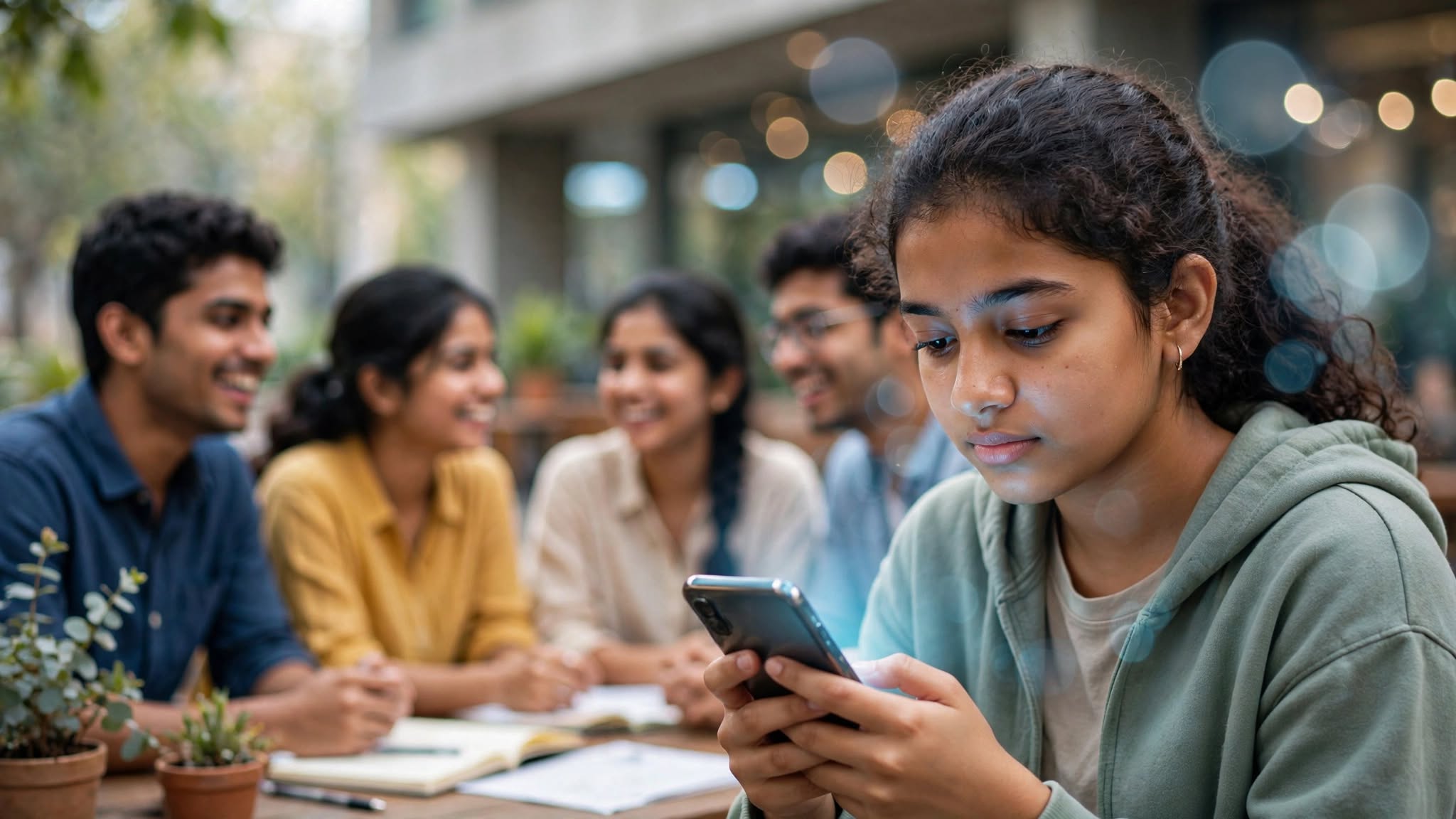
Teenagers and young adults are often the most vulnerable to the negative effects of social media. Their brains are still developing, making them more susceptible to peer pressure and the need for social validation . They often navigate a complex hybrid of offline and online life, where the number of likes and followers can feel like a measure of their self-worth. This group is also more prone to social comparison, a key factor that links social media use to conditions like anxiety and depression .
Signs That Social Media May Be Affecting Your Mental Health
It’s important to be honest with yourself and look out for these warning signs:
You feel anxious, irritable, or stressed immediately after using social media.
You constantly compare your life, looks, or success to others online.
You find yourself repeatedly checking notifications without a specific reason.
You lose sleep because you spend too much time on your phone.
You cannot focus on work, studies, or conversations because you’re preoccupied with social media.
Your mood is dependent on the likes, comments, or views your posts receive.
You are withdrawing from real-life social interactions.
You feel a compulsive need to be online and struggle to control your usage.
How to Use Social Media in a Healthier Way
Building a healthier relationship with social media is about being intentional. Here are some practical tips you can start using today:
Set Daily Screen-Time Limits: Use the built-in features on your phone to set daily time limits for your most-used apps .
Turn Off Notifications: Disable non-essential notifications to reduce the urge to pick up your phone .
Unfollow and Mute: Unfollow or mute accounts that make you feel stressed, anxious, or bad about yourself. Follow content that inspires you .
Create Phone-Free Zones: Designate specific areas, like the dining table, and times, like the first and last hour of the day, as phone-free zones.
Digital Detox: Take regular breaks, such as a "digital detox" for a few hours or a full day each week .
Avoid Scrolling Before Bed: Commit to putting your phone away at least 30-60 minutes before you plan to sleep .
Be an Active, Not Passive, User: Engage with content in a meaningful way (like having a conversation) rather than just passively scrolling. Research suggests that what you do online matters more than how much time you spend .
When Should You Seek Professional Mental Health Support?
It is important to recognize when the problem has become too big to handle alone. If you or someone you know is experiencing persistent distress, it might be time to seek professional help. You should consider speaking to a qualified mental health professional such as a psychologist or a psychiatrist in Bhubaneswar if you experience the following :
Feelings of anxiety, stress, or low mood are persistent and affecting your daily life.
You are experiencing significant sleep problems.
Your social media use is interfering with your work, studies, or personal relationships.
You are withdrawing from family and friends.
You feel a complete loss of control over your social media habits.
A professional health specialist can help you develop coping strategies and address any underlying mental health conditions. Remember, seeking help is a sign of strength, not weakness. If you are looking for a psychiatrist in Bhubaneswar, services are available that can provide the support you need .
Frequently Asked Questions About Social Media and Mental Health
1. Can social media affect mental health?
Ans: Yes. Social media can have a significant impact on mental health, both positively (by providing connection and support) and negatively (by increasing anxiety, depression, and stress). The effect largely depends on how you use it.
2. Does social media cause anxiety?
Ans: Research shows an association between social media use and anxiety. While it doesn't cause anxiety in everyone, features like comparison, FOMO, and constant notifications can exacerbate anxiety symptoms.
3.Can excessive social media use affect sleep?
Ans: Yes. Late-night social media use is repeatedly shown to be associated with a decrease in sleep quality and duration. The blue light from screens and mental stimulation can keep your brain alert, making it harder to fall asleep.
4. How does social media affect self-esteem?
Ans: Social media can lower self-esteem by encouraging social comparison. Seeing the highly curated lives of others can make you feel inadequate about your own life, a phenomenon often described as "comparison is the thief of joy."
5. How can I reduce my social media use?
Ans: You can start by setting app timers, turning off notifications, unfollowing negative accounts, and creating phone-free routines, especially around bedtime and during meals.
6. Is social media always bad for mental health?
Ans: No. Social media can be a powerful tool for good. It can offer social support, foster connection, help with identity formation, and provide access to valuable resources.
7. When should I seek professional help?
Ans: You should seek professional help if you are experiencing persistent feelings of anxiety, depression, or stress that interfere with your daily life, relationships, or work/studies. A psychiatrist in Bhubaneswar or other qualified professional can help you.
Conclusion
Social media is a powerful tool that has changed the way we live, work, and connect. While it offers numerous benefits, it’s crucial to be mindful of its potential downsides. The impact of social media on our mental health isn’t black and white. It’s about finding the right balance to ensure it remains a positive part of our lives. By being more intentional about our digital habits and curating our online environment, we can protect our well-being and foster a healthier relationship with technology.
Taking the First Step: Your Mental Health Matters
If you or a loved one are struggling with anxiety, depression, or any other mental health concern, you don't have to face it alone. Professional support is available to help you navigate these challenges and work toward recovery.
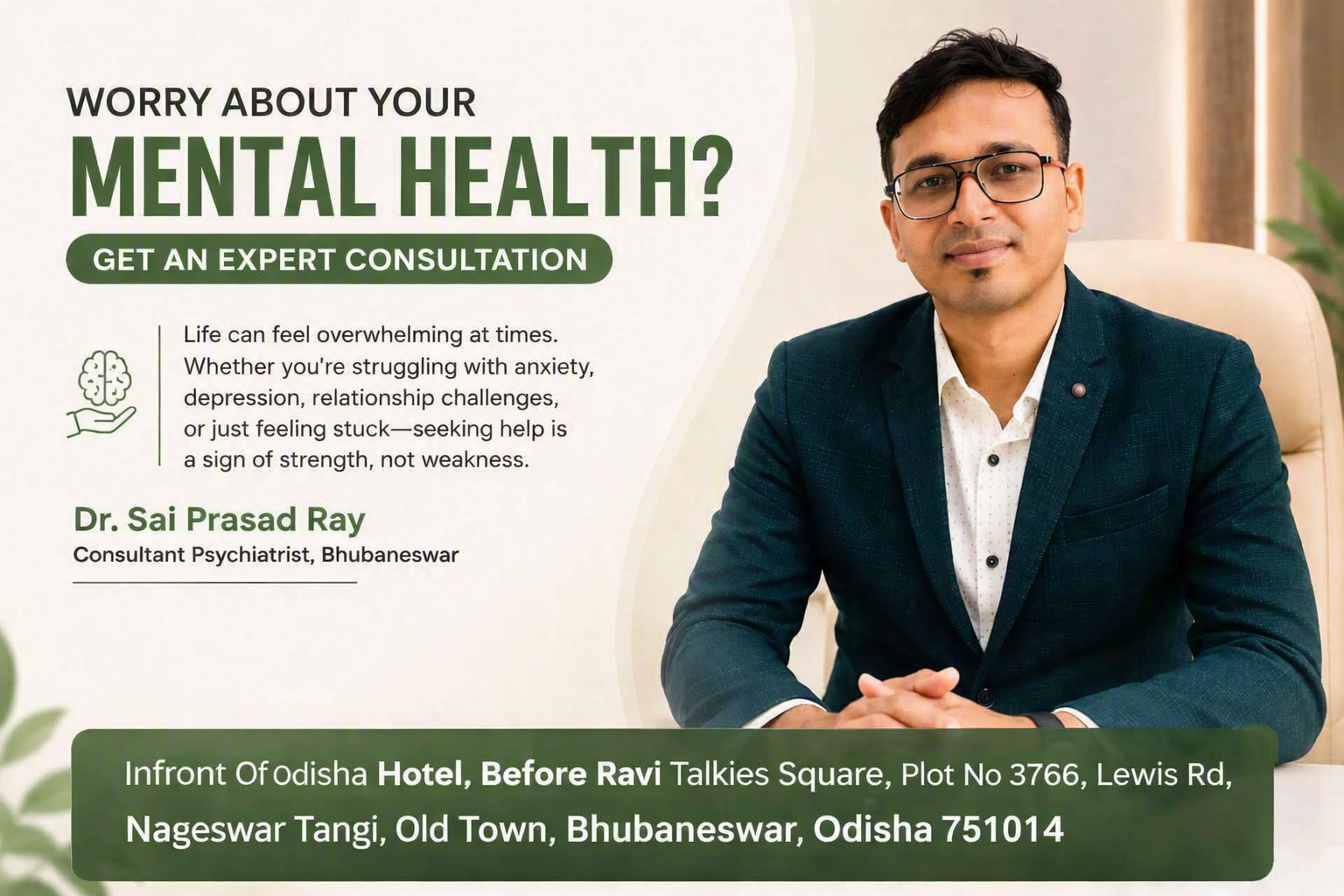
Dr Saiprasad Ray is a compassionate and experienced Psychiatrist who provides holistic mental health services to people of all age groups. Having a specialization in treating a wide range of conditions like diagnosis and treatment of depression, anxiety, stress-related disorders, bipolar disorder, schizophrenia, addiction, OCD, sleep disorders, and other psychiatric conditions
Anandam Psychiatry & Wellness Clinic
Address: Infront of Odisha Hotel, Before Ravi Talkies Square, Plot No. 3766, Lewis Road,
Nageswar Tangi, Old Town, Bhubaneswar, Odisha - 751014.
Contact :- +91 9337132129
Visit Location :- https://maps.app.goo.gl/99su41CyPaNX6uhi6
Disclaimer :- The information provided in this blog is intended for general educational and informational purposes only. It is not intended to replace professional medical advice, diagnosis, or treatment from a qualified healthcare professional.